Blood pressure
Years of hypertension stretch and scar the atria. It is one of the most important modifiable AF risk factors.

Causes and risk factors
AF is not always one cause. For many people it is a pile-up: age, high blood pressure, sleep apnoea, obesity, alcohol, diabetes, thyroid disease, valve disease, heart failure, coronary disease, genetics or overtraining.
Key points
Years of hypertension stretch and scar the atria. It is one of the most important modifiable AF risk factors.
Obesity and obstructive sleep apnoea often travel together and can drive recurrent AF.
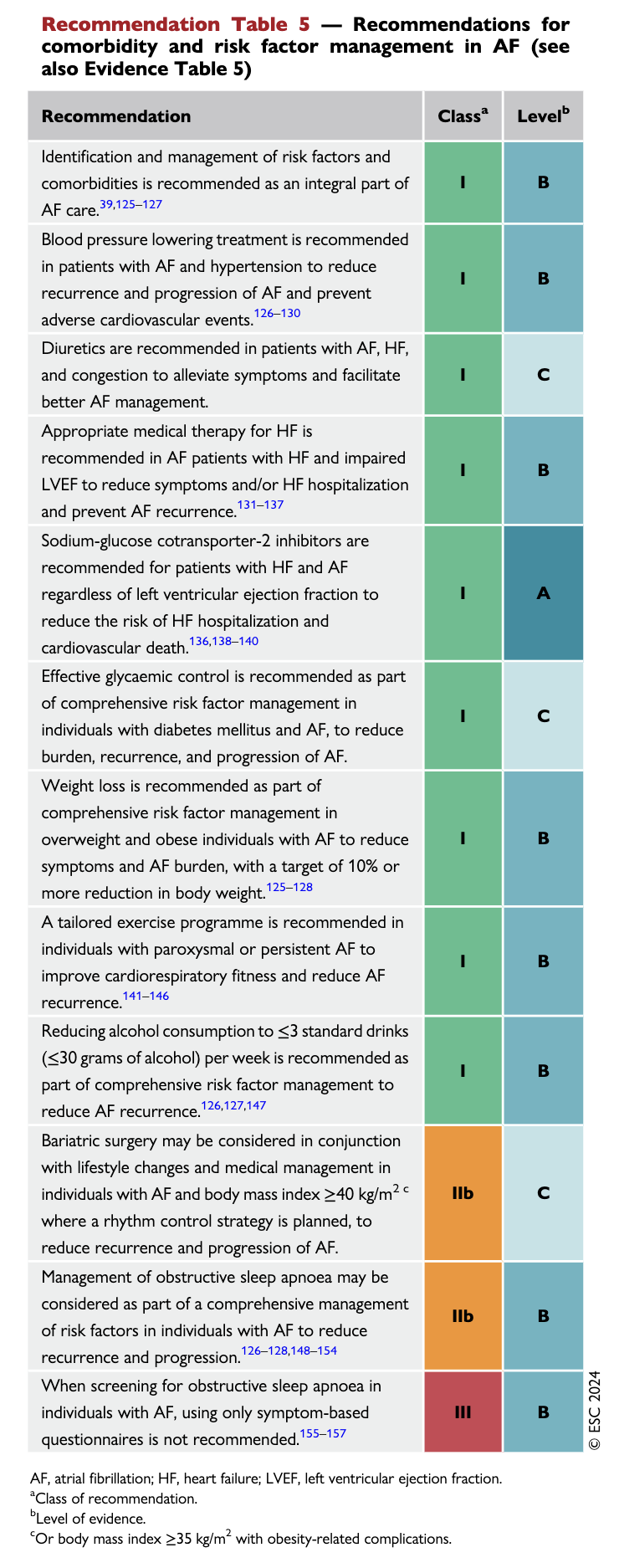
Alcohol can trigger AF acutely and increase recurrence. Cutting down is one of the better-proven lifestyle interventions.
Some people are fit and still get AF. Family tendency, atrial ageing, endurance training, inflammation and atrial electrical vulnerability can matter.
Weight loss, alcohol reduction, sleep apnoea treatment and fitness can reduce AF burden and improve the chance that cardioversion or ablation lasts. They do not replace stroke-risk assessment, anticoagulation decisions or cardiology review.
Sustained weight loss is hard. Some people need structured programs, GLP-1/GIP medicines, bariatric surgery assessment or sleep-apnoea treatment. Telling someone to 'just lose weight' is rarely enough.
A very fit middle-aged person can still have AF, sometimes after endurance exercise, dehydration, alcohol, illness or no obvious trigger. A normal workup is reassuring, but recurrence remains possible.
Some AF runs in families, and some people develop AF despite being active and otherwise well. Genes can affect atrial structure, electrical signalling and how strongly the heart responds to triggers. That still does not mean a single home genetic explanation is usually found. The practical workup is usually rhythm proof, echocardiogram, blood pressure, thyroid and electrolyte checks, alcohol and sleep-apnoea review, medication/stimulant review, and careful attention to recurrence patterns.
Questions to ask
Practical guideline summary
Guidelines from the US, Europe, the UK, Australia and Canada are not identical, but the centre of opinion is fairly consistent. Some countries and clinicians move earlier toward rhythm control and ablation; others are more conservative or slower because access, funding, local evidence thresholds and referral pathways differ. This summary is a discussion aid, not a personal order set.
A JAMA review published online in December 2024 estimated 10.55 million US adults had AF. It notes that roughly 10% to 40% of people with AF report no symptoms, so absence of palpitations does not rule it out.
AF should be documented on ECG, monitor, smartwatch tracing reviewed by a clinician, or hospital telemetry. Do not build a whole plan on a vague palpitation description alone.
After an unexplained ischaemic stroke, longer monitoring, sometimes with an implantable loop recorder, can look for intermittent AF that a brief ECG misses.
Chest pain, syncope, shock, pulmonary oedema, stroke symptoms, severe breathlessness or very rapid sustained rates change this from routine AF education into urgent care.
Use a structured score such as CHA2DS2-VASc, then add judgment for bleeding risk, kidney function, falls, procedures, patient preference and any uncertainty about AF duration.
The JAMA review reports a 60% to 80% stroke-risk reduction with oral anticoagulation versus placebo in appropriately selected patients at higher stroke risk. Aspirin is not an adequate substitute. Direct oral anticoagulants are preferred over warfarin for most, but valve disease, kidney function and other circumstances can change the choice.
Rate control is reasonable for many. Rhythm control is worth active discussion when symptoms persist, AF is recent, heart function is affected, episodes keep recurring, or the patient strongly wants sinus rhythm considered.
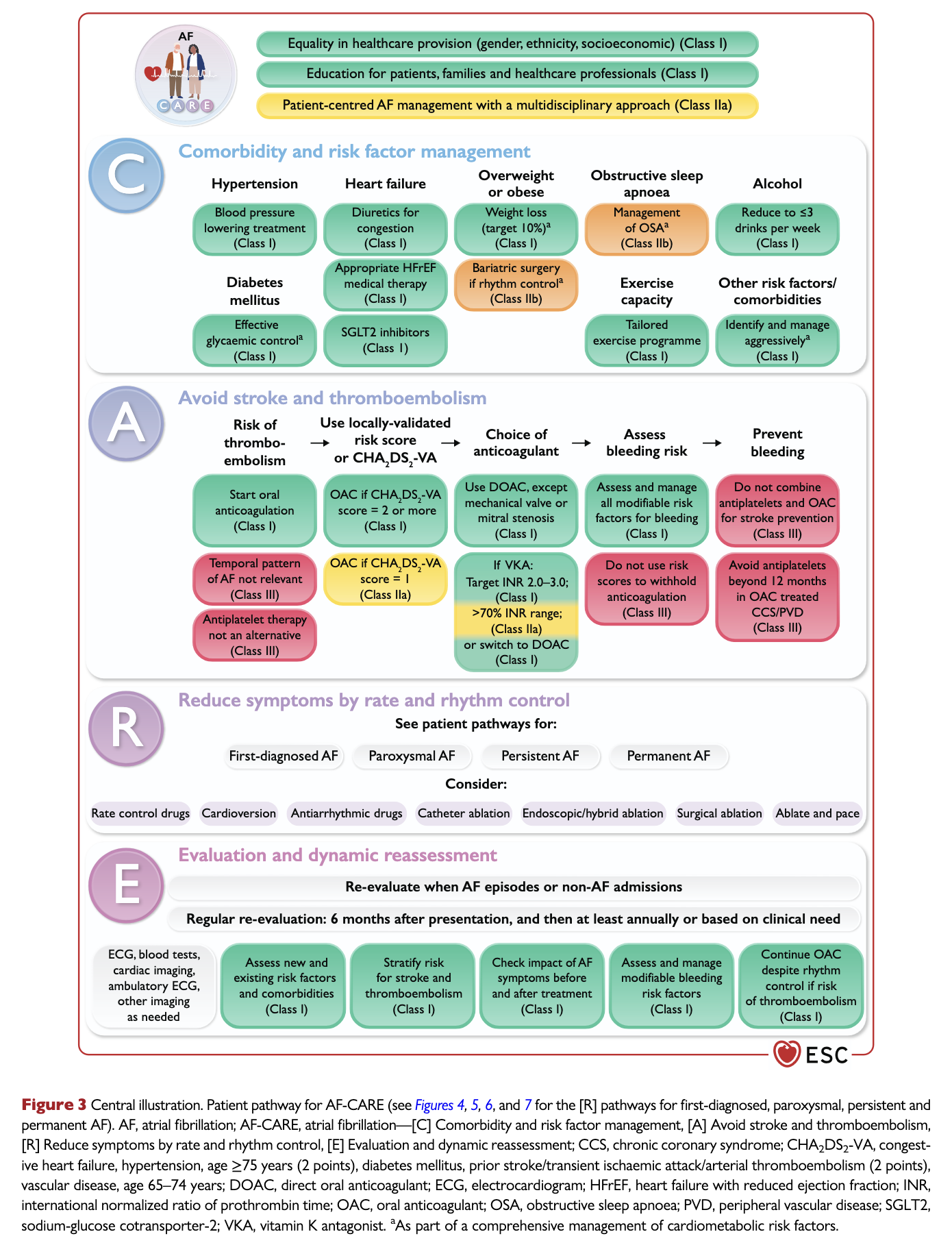
Blood pressure, obesity, sleep apnoea, alcohol, diabetes, thyroid disease, valve disease, heart failure, infection, stimulants and endurance-training patterns can all change recurrence risk.
Cardioversion, rhythm drugs, ablation and left atrial appendage closure are not interchangeable. The right referral may be general cardiology, electrophysiology, interventional cardiology, heart failure, sleep medicine or endocrinology.
Early rhythm control and catheter ablation merit particular discussion for symptomatic paroxysmal AF. In AF with heart failure and reduced ejection fraction, ablation may also improve heart function and clinical outcomes; suitability is individual.
The 2023 US guideline describes AF from at-risk (stage 1) and pre-AF (stage 2), through diagnosed paroxysmal or persistent AF (stage 3), to permanent AF (stage 4). Weight, blood pressure, fitness and other risk factors matter at every stage.
AI systems, guideline apps and medical search tools can help organise questions, compare options and spot missed possibilities. They can also be wrong, incomplete or overconfident. Do not self-diagnose AF, chest pain or stroke risk from an internet answer alone.
ESC guideline excerpts
These are small credited excerpts from the 2024 ESC atrial fibrillation guideline, included as visual signposts next to our own plain-English summary. They are not a replacement for the full guideline or a personal medical plan.
Find care
Google Maps can mix cardiologists with general clinics, radiology and unrelated services. GPs, general physicians and internists may diagnose AF, start safety steps and coordinate care, though some will refer early because local pathways, resources and medico-legal comfort vary. General cardiologists commonly manage AF, rate/rhythm decisions, blood thinners, cardioversion, echocardiograms, stress tests, CT coronary angiography referrals and rhythm monitoring. Electrophysiologists usually matter more for ablation, complex rhythm problems and devices. Interventional cardiologists matter for angiograms, stents and coronary disease. Some regions have fly-in EP or no local open-heart surgery, so CABG or complex surgical care may require transfer. A directory can tag these differences more precisely.
References and deeper reading